

Sei italiana? 🇮🇹 — How to Ask Yes/No Questions in Italian
Let’s learn: the questions in Italian 🇮🇹

🌴 New to Italian for Beginners? Start here!
🇮🇹 Remember: it’s enough to do just one exercise a day.
❣️ Every contact with the Italian language counts!
Ciao!
Today, we will learn to ask closed questions in Italian.
✅ Esercizio 1
🎧 Ascoltiamo.
Listen and decide which of the following is a question. How do you know?
The second one is always a question.
The intonation goes up.
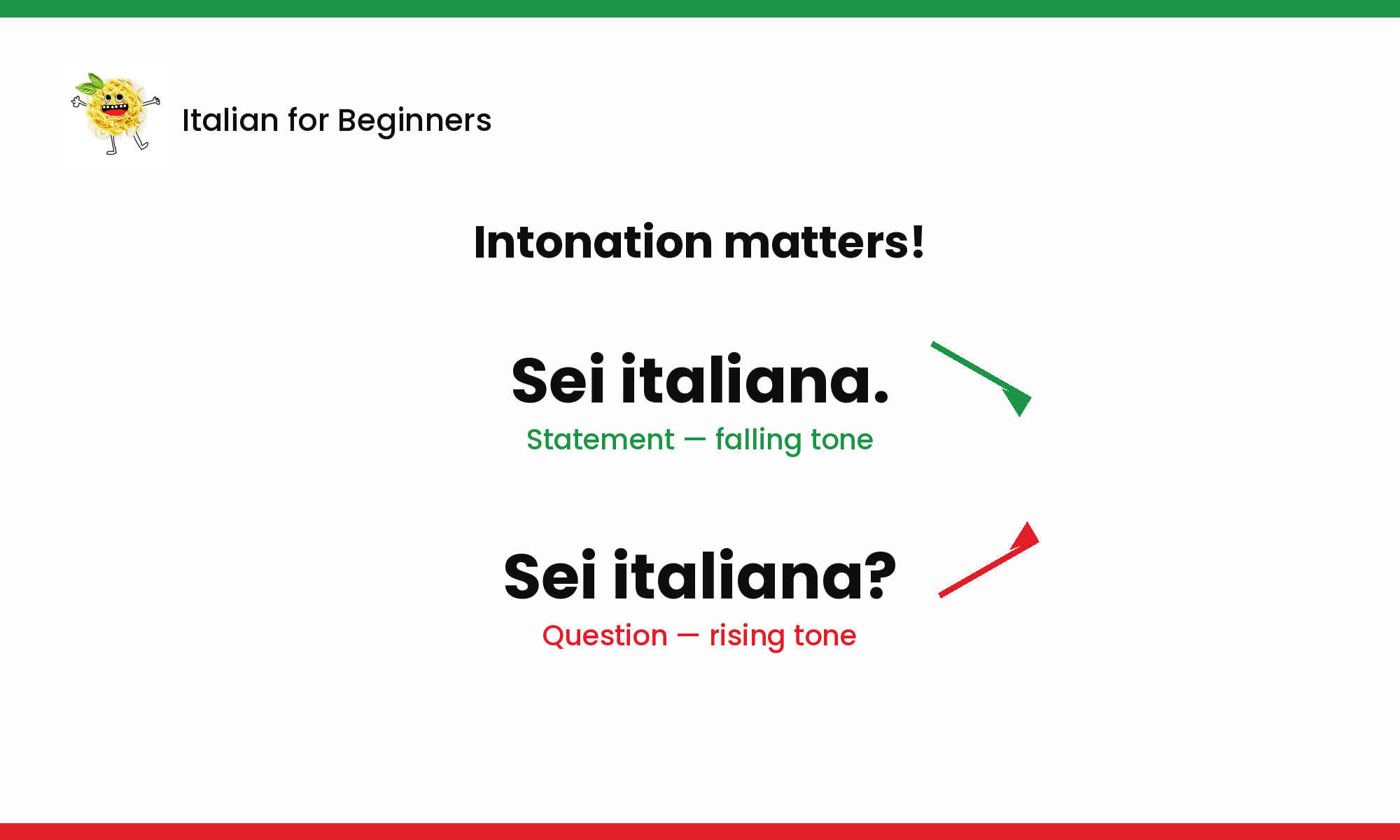
💡Remember:
⚠️ For a closed question, there is no inversion, no added word like are or do in English. You just go up with the intonation.
Sei italiana?
Sei spagnolo?
Hai fame?
Hai sete?
Sei arrabbiato?
E come rispondere?
How can we answer?
Sei italiana?
Sì, sono italiana.
No, non sono italiana, sono tedesca.
⚠️ Sì or Si? What's the Difference in Italian?
Sì (with an accent) means “yes”:
Sì, sono italiana.
Sì, ho fame.
Si (no accent) is a reflexive pronoun used with verbs like chiamarsi:
Lui si chiama Marco.
Si chiama Anna.
The accent is the only difference — but it changes the meaning completely.
So be careful when you write:
sì = yes (sì, sono italiano)
si = pronoun (Lui si chiama Marco).
⚠️ If you don’t remember how to form the negative, don’t worry! It’s normal to forget. Go through the lessons again here: non ho fame.
✅ Esercizio 2
✏️ Scriviamo. Scrivi 10 domande in italiano.
Write 10 questions for this woman, in Italian.

👇Below you will find more exercises to practice
This is what Premium Membership gets you every week:
Full exercise set covering all four skills — writing, listening, reading, speaking
A structured path from zero, lesson by lesson
Daily writing practice in our community chat, where I personally answer and correct you
❌ No textbooks, no apps, no guessing what to study next.
✅ Just one subscription and 15 minutes, 3 times a week.
☕ Enough to go from zero to ordering your coffee in Italian within a few lessons.
